

How Better Job Costing Helps Contractors Protect Profit Margins
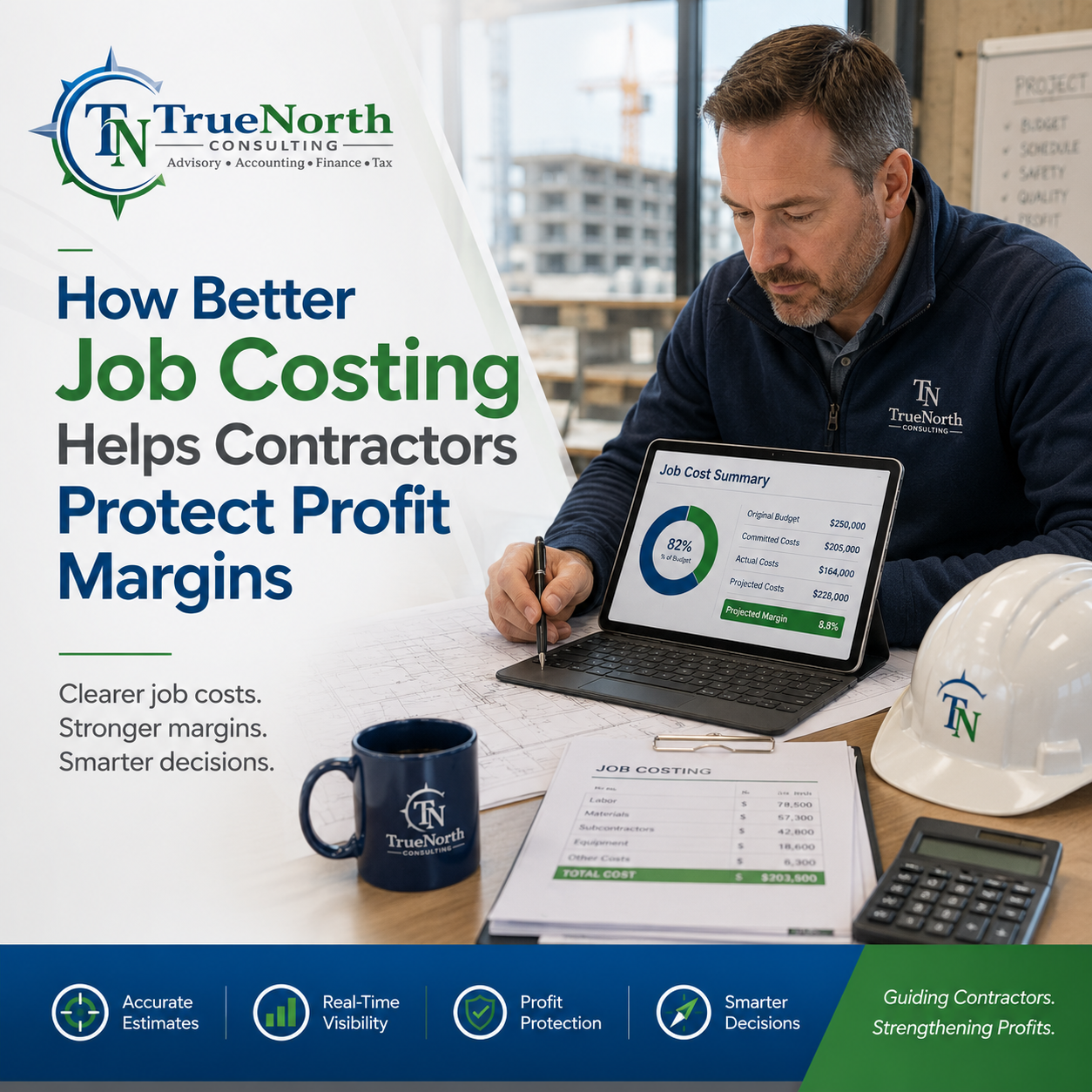
A contractor can finish a project, send the invoice, collect the payment, and still wonder where the profit went.
The job looked good on the surface. The client was happy. The team stayed busy. Materials were ordered, crews were scheduled, subcontractors were paid, and the work was completed. But once the dust settles, the owner looks at the numbers and realizes the project did not produce the margin they expected.
That is one of the biggest financial frustrations in construction and project based work. The business may be moving, but the owner may not know which jobs are actually making money and which ones are quietly eating into profit.
This is where job costing becomes critical.
Job costing helps contractors understand the true cost of each project. It connects labor, materials, subcontractors, equipment, overhead, change orders, and other project costs to the specific job they belong to. Without that visibility, a contractor may be making decisions based on the total bank balance or overall revenue instead of the real performance of each job.
A busy job is not always a profitable job
In construction, being busy can feel like success. A full schedule, active crews, and steady invoices can make the business look healthy. But activity does not always equal profit.
A project can generate strong revenue and still produce weak margins if labor runs longer than expected, materials increase in cost, change orders are not tracked properly, or subcontractor costs are not included accurately. Small overruns may not look serious at first, but across multiple jobs, they can quietly reduce the owner’s profit.
This is why contractors need to look beyond whether the invoice was paid. They need to know whether the job was priced correctly, whether the estimate matched reality, and whether the business actually kept enough after all project costs were paid.
What job costing really shows
Job costing gives the contractor a clearer view of each project. Instead of only seeing total sales and total expenses for the month, the owner can see how each job performed on its own.
A good job costing process helps answer important questions. Did the project stay within budget? Were labor hours higher than expected? Did material costs increase? Were change orders billed correctly? Did subcontractor costs reduce the margin? Which types of jobs are most profitable? Which clients or projects create the most pressure?
These questions matter because they reveal patterns. Maybe a certain type of project always runs over budget. Maybe one crew is more efficient than another. Maybe the company is underpricing smaller jobs. Maybe overhead is not being considered properly when preparing estimates.
Without job costing, those problems can stay hidden.
Poor job costing leads to poor pricing
Many contractors price jobs based on experience, market pressure, or what they think the client will accept. Experience matters, but without accurate historical job data, pricing becomes risky.
If past jobs were not costed properly, the owner may not know what similar projects truly cost. That means new estimates may be built on incomplete information. The business may continue quoting work too low, accepting jobs with weak margins, or failing to adjust pricing when material, labor, or subcontractor costs increase.
Better job costing helps contractors price future work with more confidence. It gives the owner real information from previous jobs, not just memory or guesswork. Over time, this can improve estimating, protect margins, and help the business choose better projects.
Change orders can make or break the margin
Change orders are one of the easiest places for profit to leak.
A client asks for an adjustment. The scope changes slightly. More materials are needed. Labor takes longer. A subcontractor adds a charge. If those changes are not documented and billed properly, the contractor may end up absorbing the cost.
This happens often because the team is focused on getting the work done. The change feels small in the moment, but when several small changes happen on one project, the margin can shrink quickly.
Strong job costing helps catch those changes. It creates a clearer connection between the work performed, the cost incurred, and the amount billed to the client. That protects the contractor from giving away labor, materials, or time without realizing it.
Cash flow depends on job visibility
Job costing is not only about profit. It also affects cash flow.
Contractors often pay for labor, materials, equipment, and subcontractors before they receive full payment from the client. If job costs are not tracked closely, the owner may not see how much cash is tied up in active projects.
This can create pressure even when the business has plenty of work. Payroll is due. Vendors need payment. Subcontractors are waiting. Materials have already been purchased. If billing is delayed or costs exceed the estimate, cash flow can become tight very quickly.
Better job costing helps the owner see where money is going and which jobs are putting pressure on cash. It also supports better billing schedules, progress billing, and follow up on unpaid invoices.
The reports need to tell the real story
A standard profit and loss report can show whether the overall business made money, but it may not show which jobs created that profit or which ones reduced it.
That is why contractors need reports that connect financial activity to actual projects. A job profitability report, work in progress review, cost to complete estimate, and job budget comparison can give the owner a much clearer view of what is happening.
The goal is not to create reports just for the sake of reporting. The goal is to help the contractor make better decisions. Which jobs should we pursue again? Which jobs should we avoid? Where are we underestimating labor? Are change orders being billed? Are project managers seeing the cost impact early enough?
Good reports should help the owner lead the business, not just review the past.
How True North Consulting can help
At True North Consulting, we understand that contractors need more than basic bookkeeping. They need financial systems that show project performance clearly and help protect margins before problems become expensive.
We help construction and project based businesses improve job costing, organize bookkeeping, review cash flow, track project costs, strengthen reporting, and build better financial visibility. Our goal is to help business owners understand not only whether the company is profitable, but where that profit is really coming from.
For contractors, this matters. Better job costing can improve pricing, reduce margin leaks, support stronger cash flow, and give owners more confidence when making decisions about future work.
If your business is busy but the profit does not feel as strong as it should, True North Consulting can help you take a closer look at the numbers behind each job.
Final thought
A contractor should not have to wait until the end of a project to find out whether the job made money.
Better job costing gives business owners clearer visibility while the work is happening. It helps identify overruns earlier, protect change order revenue, improve estimates, and understand which jobs truly support the business.
In construction, the money is often made or lost inside the details. Clean job costing helps make those details visible.