


Section 280E limits federal tax deductions for cannabis businesses, making it essential to distinguish operating expenses from inventory costs. Federally legal hemp businesses are exempt from Section 280E, so understanding how your products and activities are classified matters.
If you’re dealing with complex records, inventory costs, or uncertainty about what your financial reports mean, you’re not alone. The right cannabis accounting approach can clarify your tax position, organize financial documentation, and support better operating decisions.
This article explains how Section 280E affects cannabis businesses, why inventory tracking and cost allocation matter, and how CBD or hemp operations differ. You’ll also learn about accounting challenges in Virginia and how expert support can connect your financial records with day-to-day operations.
Key Takeaways
- Learn how federal tax treatment can shape which business expenses affect taxable income, and why cannabis and hemp operations need different considerations.
- See how inventory records and cost allocation connect product activity to reliable financial reporting.
- Identify bookkeeping and cash flow pressure points that can make tax planning and business decisions harder.
- Understand when specialized accounting and advisory support can help turn financial records into clearer operating insight.
How does IRS Section 280E impact cannabis businesses?
Section 280E limits federal tax deductions for cannabis businesses, making accurate expense and inventory records essential. Its effect depends on the business’s products, activities, and cost accounting.
Federal Tax Restrictions and Deductions
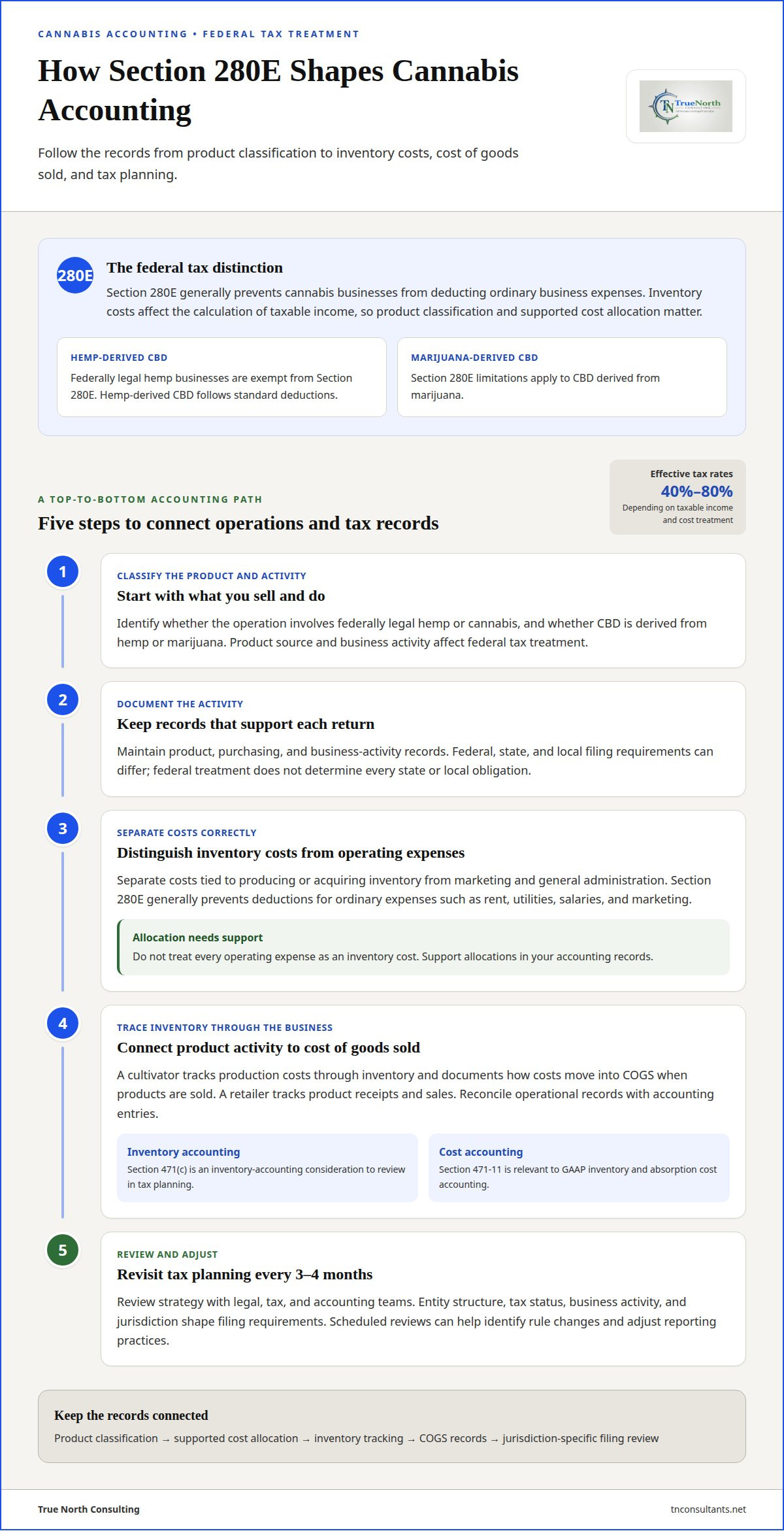
Section 280E generally prevents cannabis businesses from deducting ordinary business expenses such as rent, utilities, salaries, and marketing. Federal treatment of cannabis as a controlled substance means these businesses don’t receive the same tax benefits as businesses in other industries. Effective tax rates can range from 40% to 80%, depending on the business’s taxable income and cost treatment. Some businesses may still qualify for deductions such as the research and development tax credit.
Federal and Virginia filing requirements depend on your entity structure, tax status, and business activity. Keep records that support each return, and distinguish federal treatment from applicable Virginia and local filings.
Cost of Goods Sold Treatment
Cost of goods sold (COGS) matters because Section 280E restricts deductions, while inventory costs affect the calculation of taxable income. Separate costs tied to producing or acquiring inventory from expenses such as marketing and general administration. Don’t treat every operating expense as an inventory cost; allocations need support in your accounting records.
Section 471(c) is an inventory-accounting consideration to review as part of tax planning. For a cultivator, that means tracking production costs through inventory and documenting how costs move into COGS when products are sold. Clear transaction categorization helps explain those figures.
Compliance and Tax Planning
Tax planning should reflect the business’s product source. Federally legal hemp businesses are exempt from Section 280E, and the 2018 Farm Bill exempted hemp and hemp-derived CBD businesses from that section. CBD derived from hemp follows standard deductions, while CBD derived from marijuana faces Section 280E limitations. Product and purchasing records help support that distinction.
Federal, state, and local rules can differ in their filing requirements and treatment of business activity. Section 280E is federal; state and local obligations depend on jurisdiction and the business’s operations. Keep jurisdiction-specific financial documentation and review tax strategy with legal, tax, and accounting teams every 3-4 months. This scheduled review helps identify rule changes and adjust reporting practices without assuming federal treatment has changed.
What Makes Proper Accounting So Valuable To Cannabis and CBD/hemp CEO’s?
Reliable bookkeeping connects inventory movement, sales, and spending to useful business reports. For cannabis operators, each step should leave a clear record, from receiving products to completing a retail sale.
Bookkeeping and Cost Accounting
Bookkeeping records purchases, sales, payroll, and operating activity in consistent categories. Cost accounting adds product-level detail, helping you understand which costs relate to cultivation, processing, or retail. For example, separate production costs from general administrative expenses rather than grouping them in one broad account. Clear records support financial statements, tax preparation, and operating decisions.
Accrual Accounting for Inventory and Revenue
Accrual accounting records revenue when earned and expenses when incurred, rather than waiting for cash to move. It helps show sales, inventory, and cost of goods sold in the periods they relate to. Cannabis businesses are advised to use accrual accounting to track those items. Section 471-11 is relevant to GAAP inventory and absorption cost accounting. In practice, that means tracking inventory-related production costs instead of relying only on bank activity.
Inventory Allocation and Seed-to-Sale Tracking
Cost allocation should connect documented production activity with the products available for sale. A cultivator can trace materials and labor through harvest, processing, and finished inventory; a retailer can track product receipts and sales. METRC or another state-mandated tracking system can help monitor cannabis from cultivation to sale. Reconcile operational records with accounting entries so reported inventory and product costs reflect documented activity.
Cash and Inventory Management
Cash controls and inventory management work best when reconciled with sales records. Daily cash counts and comparisons between sales reports and deposit records can identify discrepancies early. Cash payments of $10,000 or more require Form 8300 filing within 15 days. A rolling 13-week cash-flow forecast can help plan operating expenses and tax remittances. These practices give owners timely insights for decisions and reduce preventable reporting errors. For help connecting records to decisions, explore accounting services.
What are the primary accounting challenges for cannabis businesses?
Cannabis accounting brings bookkeeping, operational records, and financial reporting together. Compared with general business accounting, it often requires closer coordination among the teams responsible for sales, inventory, and cash.
Tax Deductions and Cost of Goods Sold
Even when tax treatment has been addressed, maintaining a consistent account structure can be challenging. Separate accounts for distinct business activities help owners see where transactions belong and spot inconsistent entries. For example, a business with cultivation and retail operations needs records that show activity by function. Clear categories also help management prepare reports and explain how figures were assembled.
Chart of Accounts and Accounting Differences
A chart of accounts should reflect how the business operates, not just the default categories in accounting software. A dispensary may need distinct accounts for sales channels, product types, and inventory adjustments. This structure helps management compare activity across operations and identify unusual entries. The right categories depend on the company’s activities and reporting needs.
Audit preparation can be difficult when records are spread across systems or teams. A clear process for retaining invoices, sales summaries, inventory records, and reconciliations helps create a traceable history. If reported activity conflicts with source documents, a forensic review can help locate the discrepancy and identify records that need correction. These accounting practices support organized records, but they are not audit or legal services.
Cash management requires looking beyond the current account balance. Owners need to understand expected receipts, planned payments, and timing gaps that could affect operations. A cash forecast helps management consider those obligations before committing funds to expansion or new inventory.
Business valuation and merger discussions bring additional recordkeeping demands. Potential partners need financial information that clearly reflects operating performance and business structure. Consistent reporting helps owners explain results, identify open questions, and prepare for informed transaction discussions.
Benefits of hiring a cannabis accounting expert
A specialist can connect financial records with the operational details behind them. For a cultivation business, processor, or dispensary, this can help reports reflect how products move and how costs arise.
Specialized advisors can help coordinate accounting practices, tax compliance, and regulatory recordkeeping. For example, they can align sales data, inventory reports, and ledger entries so management can spot differences. They can also organize financial documentation and clarify which records support reported transactions. This gives owners a clearer basis for planning and decision-making.
Expert support can turn financial information into operating insight. A monthly review can connect product margins with expense trends, sales activity, and available cash. If a dispensary’s sales records and inventory changes don’t align, a specialist can help identify the discrepancy for follow-up. Clear reporting helps internal teams understand the issue and assign next steps.
As a business grows, its accounting processes may need to evolve. A specialist can help establish consistent transaction categorization, document responsibilities, and improve how operational information reaches finance. For example, cultivation records can inform inventory and cost reporting. Defined processes reduce reliance on one employee’s memory and help teams maintain reliable reports.
Choose support that addresses your actual challenges, not just routine data entry. Consider whether you need help with records, reporting, or connecting financial information to operational decisions. If specialized support would help clarify those processes, discuss your accounting needs.
True North Consulting: Cannabis accounting
True North Consulting helps Virginia cannabis businesses connect financial records with inventory, sales, and operating activity. Its accounting services support bookkeeping, cost-of-goods-sold tracking, financial reporting, and financial systems. This specialized cannabis accounting can help address gaps in records or difficulties tracing product costs.
Tax services support tax preparation and compliance needs. Fractional CFO services provide financial insight for planning and growth decisions. With cannabis accounting tailored to your business, you can focus on the reporting or financial process that needs attention, from organizing accounting records to improving visibility into performance.
If you’re ready to discuss cannabis accounting for your Virginia business, contact True North Consulting.
Set Your Next Financial Priorities
Start by identifying which financial decisions need clearer support. Are you preparing to grow, reviewing business performance, or trying to make reports more useful to your operations? Defining that priority gives your work with an accountant a practical starting point and keeps it focused on your business needs.
True North Consulting helps cannabis businesses connect financial information with operational decisions. Its fractional CFO, tax, and accounting services can support different needs as your business develops. The right focus may change as your records, operations, and goals evolve.
When you’re ready to discuss how cannabis accounting can support your next business decisions, contact True North Consulting. A clear starting point can help you move forward with greater confidence.
Frequently Asked Questions
When do I need to hire a cannabis accountant in Virginia?
Bring in a cannabis accountant before inventory, tax, and reporting decisions become difficult to reconstruct. Early support can help a Virginia operator set up bookkeeping categories, document product purchases, and connect sales records with accounting entries. If your business already operates, consider specialized help when records have gaps, product costs are unclear, or financial statements don’t support decisions about growth or cash flow.
Can I Serve A Cannabis/CBD/Hemp Company If It's Not Legal In My State?
Accounting support does not authorize a business to operate or replace licensing and legal requirements. Whether a cannabis, CBD, or hemp activity can operate depends on applicable state and federal rules, including how the product is classified. Keep the distinction clear: accounting work organizes and reports financial activity; it does not determine legal permission. State-specific legal questions require legal advice.
Can’t I Just Figure This Out On My Own?
You can manage basic bookkeeping internally if your records are organized and your team understands the transactions. The challenge is keeping product activity, inventory, tax treatment, and financial reporting aligned as the business changes. For example, a new product line may need separate tracking to show its sales and margins. Specialized support is useful when those details exceed your team’s time or experience.
Not Sure Where to Start?
Start by naming the decision your records need to support, such as preparing a tax return, assessing a product line, or planning cash needs. Then identify the relevant records, such as sales reports, purchase documents, inventory summaries, and bank activity. A focused review can reveal whether the issue is missing documentation, inconsistent categorization, or a reporting process that needs attention.
How does IRS Section 280E affect cannabis businesses’ taxes?
Section 280E restricts federal deductions for businesses trafficking in controlled substances, including ordinary expenses. The practical effect is that tax calculations depend on how expenses and inventory costs are recorded and supported. Don’t assume the same treatment applies to every cannabis, CBD, or hemp business. Product source and business activity matter, so tax planning should start with accurate product and transaction records.
Which cannabis business expenses can be included in cost of goods sold under 280E?
Costs connected to acquiring or producing inventory may be relevant to cost of goods sold, but not every business expense belongs there. The appropriate treatment depends on the business’s activities, inventory accounting method, and supporting records. Keep production or purchasing documentation linked to inventory entries, and distinguish general operating expenses. Section 471(c) is one inventory-accounting consideration to review with True North Consulting during tax planning.