


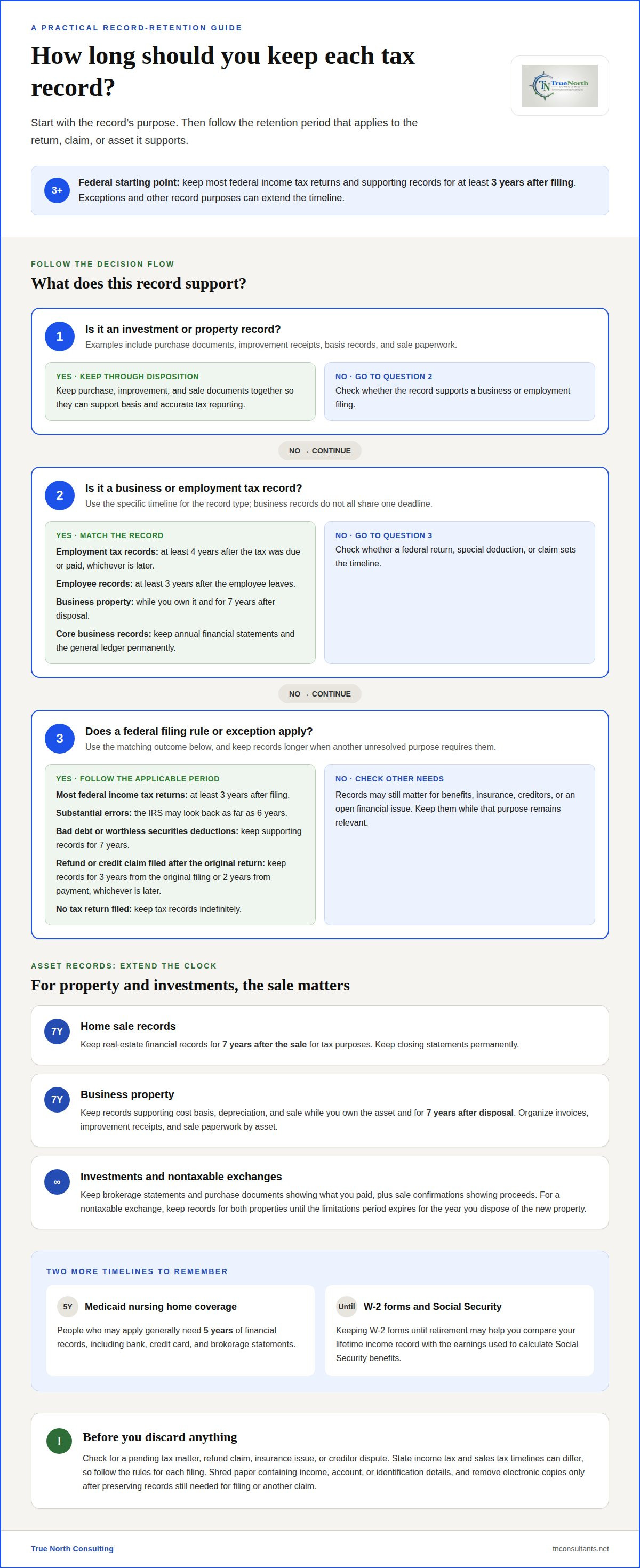
For most federal income tax returns, keep the return and its supporting records for at least three years after filing. The Internal Revenue Service generally has that period to assess tax, so how long to keep tax records depends on the return and whether an exception applies.
The Internal Revenue Service may look back as far as six years when it identifies substantial errors, and certain records, such as documents supporting a bad debt deduction or a loss from worthless securities, should be kept for seven years. State retention periods can differ, so the right timeline may also depend on where you file and whether the records relate to sales tax, investments, or property.
This guide covers retention periods for state returns, business tax documents, and investment and property records. It also explains which business records to keep permanently, including annual financial statements and the general ledger.
Key Takeaways
- Use the federal retention period as a starting point, then account for exceptions that may extend how long you need supporting documents.
- State return and sales tax record timelines can vary, so keep records according to the rules that apply to your filings.
- Hold investment and property documents through ownership and the related tax period after a sale or other disposition.
- Keep core business records, including annual financial statements and the general ledger, permanently to support future reporting and decisions.
What are non-tax reasons to save tax returns and records?
For most federal income tax returns, keep the return and supporting records for at least three years after filing. The Internal Revenue Service generally has three years from filing to assess tax. Keep the return itself, plus statements and receipts that support reported income, deductions, and credits. These records can also help you prepare a later return or explain a prior filing.
Some situations call for a longer retention period. If you’re self-employed or have a complicated return, keeping tax records and supporting documents for six years can help address questions about unreported income. The Internal Revenue Service may request additional records when it identifies a substantial error and usually does not go back more than six years. For a refund or credit claim filed after the original return, keep records for three years from the original filing or two years from payment, whichever is later.
Business records have separate timelines. Employers should retain employment tax records for at least four years after the tax was due or paid, whichever is later. Keep employee records for at least three years after an employee leaves. For business expenses, retain receipts and supporting documents showing the amount, purpose, and business connection. These can support an expense deduction if a tax question arises later.
Some records have value beyond tax compliance. Keeping W-2 forms until retirement may help you compare your lifetime income record with the earnings used to calculate Social Security benefits. People who may apply for Medicaid nursing home coverage generally need five years of financial records, including bank, credit card, and brokerage statements.
Certain deductions have longer retention periods. Keep records supporting a bad debt deduction or loss from worthless securities for seven years, according to the Internal Revenue Service. If you don’t file a tax return, keep your tax records indefinitely. For records with both tax and personal uses, such as proof of income or benefits, retaining them while they serve a practical purpose can spare you from having to reconstruct them later.
How long to keep state tax returns and documents?
State retention periods vary across the United States. Keep each state return with the records that support it for the applicable period, based on your state’s rules. Retain filed returns and documents supporting income, deductions, payments, and credits. Discard duplicates only when they no longer serve a tax or other financial purpose.
Keeping Returns and Supporting Documents
A state return and its supporting documents form a record of what you reported and paid. Keep the return with related forms, statements, receipts, and payment confirmations. Check the retention period that applies to each state filing rather than assuming the federal period automatically applies. Knowing how long to keep tax records for each filing helps preserve evidence if a state tax question arises.
Organize records by tax year and filing type. This makes it easier to identify documents supporting a particular state return without sorting through unrelated business or personal files.
Documents to Keep Longer
Some records remain useful after their immediate filing purpose ends. Keep documents supporting an ongoing financial claim, such as proof of a payment disputed by a creditor or paperwork an insurer may need. State sales tax records may have different retention periods from income tax records, so group sales reports, returns, and payment records by filing period.
If you’re unsure whether a record relates to an open issue or another financial need, retain it while that connection remains relevant. How long to keep tax records can depend on a document’s purpose, not just the return it supports.
Caution Before Discarding Tax Documents
Before disposing of a document, make sure it isn’t needed for a pending tax matter, refund claim, insurance issue, or creditor dispute. Keep the original return and records that substantiate its figures. Duplicate copies and routine papers with no continuing purpose may be discarded after the applicable period ends.
Protect sensitive information during disposal. Shred paper containing income, account, or identification details, and remove electronic copies only after preserving records still needed for filing or another claim. Check whether an insurer or creditor requires a longer retention period before discarding records kept for those purposes.
Keeping investment and property records through disposition
For investments and property, the sale or other disposition helps determine how long supporting records remain relevant. Keep purchase, improvement, and sale documents together to establish basis and report the transaction accurately.
Keep property records until the period of limitations expires for the tax year in which you dispose of the property. For a home, retain real-estate financial records for seven years after the sale for tax purposes. Keep closing statements permanently, since they document the transaction and may help answer later questions about the property.
Investment records also support tax calculations. Keep brokerage statements and purchase documents showing what you paid, along with sale confirmations showing the proceeds. If you receive property through a nontaxable exchange, the new property generally takes the old property’s basis, increased by money paid. Keep records for both properties until the limitations period expires for the year you dispose of the new property.
For business property, retain records supporting cost basis, depreciation, and sale while you own the asset and for seven years after disposal. Depreciation records show how deductions accumulated over time. Organize documents by asset, including invoices, improvement receipts, and sale paperwork, rather than separating them by the year you received them.
After the relevant retention period ends, securely dispose of unneeded sensitive paper records. Shredding documents containing account details, income, or tax identifiers can help protect that information. Keep electronic records accurate, legible, and accessible if requested during an audit. Back up essential files before removing duplicates, and keep property closing statements indefinitely.
Business records to keep permanently
Keep core business records permanently, even after their immediate tax purpose ends. Annual financial statements, the general ledger, and depreciation schedules preserve a lasting history of company activity, asset values, and past filing decisions.
The Internal Revenue Service says to keep records as long as they may be needed to administer any provision of the Internal Revenue Code. That doesn’t mean every receipt must be kept forever. Retention depends on what a record supports and whether a tax matter remains open. If you don’t file a return, keep the related records indefinitely. There is no statute of limitations for fraudulent returns.
A permanent file helps show how one year connects to the next. The general ledger records transactions, annual financial statements summarize the company’s financial position and performance, and depreciation schedules track deductions claimed against assets. Together, these records can help explain an old credit, a change in asset value, or an adjustment in a later filing.
Keep permanent records in a clear structure. Separate annual financial statements, general ledger files, and depreciation schedules by fiscal year. Preserve original reports and corrected versions, with a short note explaining why a change was made. For electronic records, keep files legible and accessible, and store backup copies separately from active accounting files.
Permanent retention also supports decisions beyond tax filing. A new owner, lender, or financial adviser may need historical statements to understand business performance or trace an asset’s cost. Keep records that explain long-term transactions, not just documents tied to a single expense. For help organizing accounting records and improving reporting, get support with business accounting records.
True North Consulting
True North Consulting helps businesses organize financial records and prepare for tax obligations. If you’re unsure which records to retain, or your files are spread across accounting software, statements, and paper documents, its accounting and tax services can help bring the information into a usable system.
This support can help distinguish records tied to current filings from permanent business documents while connecting financial reporting to daily operations. Cannabis businesses can also use True North Consulting’s specialized cannabis accounting for records shaped by industry tax and regulatory requirements. Fractional CFO services help owners use reliable financial information for planning as well as filing.
For help organizing your business records, contact True North Consulting.
Make recordkeeping part of your routine
Knowing how long to keep tax records is useful only if your files stay organized and accessible. Create a clear folder for each tax year, separate personal and business documents, and note why records must be kept beyond their usual retention period. A simple process makes it easier to find supporting information when a filing question or business decision brings older records back into view.
For a growing business, proper recordkeeping also supports better financial decisions. True North Consulting provides accounting, tax, and fractional CFO services to help businesses organize financial information and put it to use. If your records are difficult to manage or your retention process needs structure, the firm can help you identify a practical next step.
Contact True North Consulting to discuss support for your business records and financial processes. A clearer system can make the next filing season easier to manage.
Frequently Asked Questions
How long should I keep records?
Set a retention date for each record type instead of treating every document alike. Label files by tax year, return, and purpose, then note when the applicable retention period ends. Keep amended returns with the original filing, along with explanations or correspondence clarifying the change. This makes it easier to find the complete filing history without keeping unrelated paperwork indefinitely.
How Many Years of Taxes Should You Keep?
There is no single retention period for every tax document. The right period depends on what the record supports, such as a filed return, payroll filing, asset, or claim. Create a simple schedule listing each record category, the relevant filing or transaction, and its disposal date. This helps prevent you from discarding supporting documents before they have served their purpose.
How should you dispose of old tax documents?
Before disposal, sort documents by tax year and separate originals from duplicates. Remove sensitive information from paper and digital files you no longer need, including copies saved in local folders or shared drives. Restrict access to records you keep to people who need them, and use clear file names. This reduces clutter and helps prevent accidental disclosure or deletion.
What should I do with my records for nontax purposes?
Identify any continuing purpose before removing a record from your files. A purchase receipt may support a warranty claim, while an ownership document may help resolve a later sale or transfer. Keep reimbursement or insurance paperwork with the related transaction until the matter is resolved. Sorting records by purpose makes it easier to find proof when a non-tax question arises.
How long should you keep federal tax returns and supporting documents?
The usual federal period is measured from the return’s filing date. However, a return filed before its due date is treated as filed on the due date when calculating the limitations period. Keep the return and supporting documents together, including schedules and explanations for unusual entries. This filing-date rule can affect when the retention period ends for an early-filed return.
What is the IRS statute of limitations for tax records?
The statute of limitations is the period the Internal Revenue Service generally has to assess additional tax after a return is filed. Its expiration doesn’t automatically make every related document safe to discard. Records tied to an asset, unresolved claim, or separate state filing may still serve another purpose, so consider the document’s full role before disposal.