


Tax planning starts before filing season. Tax planning services help you coordinate tax preparation with estimated payments and withholding as your income, business activity, or investments change.
If you own a business, invest, or manage personal income, your tax obligations can shift during the year. Reviewing financial records and changes early can clarify what to set aside and what information you will need for tax preparation.
This guide explains what tax planning can cover, how estimated payments and withholding fit into the process, and which records help build a clear financial picture. It also outlines when business owners, investors, and individuals may benefit from coordinated tax and accounting guidance. Changes in business income, investment activity, or personal circumstances can shape planning throughout the year, so you can organize relevant records and address questions before tax preparation becomes a once-a-year paperwork task.
Key Takeaways
- Connect business changes, succession goals, and filing needs to build a clearer tax planning picture.
- Consider how investment decisions and gains may affect your after-tax results throughout the year.
- Organize financial documentation and understand what to consider when selecting tax preparation support.
- Use income changes and withholding details to guide estimated payment decisions and avoid last-minute surprises.
Strategies for business owners and high-net-worth clients
Planning connects business income, entity filings, ownership decisions, and personal goals. Suitable strategies depend on how you earn income, invest, and hold assets.
Business Entity Tax Preparation and Planning
Entity planning starts with organized accounting records, income details, and documentation that supports reported activity. A tax planner can review business accounts, transaction categories, and ownership changes before preparing returns. If your business operates in multiple states, include that activity in the filing review. Bring prior returns, current financial statements, and records of major transactions to a consultation.
Tax Planning for Business Owners
Self-employed people often plan for business income and personal tax obligations together. Small businesses should also consider how entity structure, payroll, and retained earnings affect tax preparation. Owners with complex wealth-planning needs may consider succession, capital gains from a business sale, or multi-state filings. Options can include irrevocable life insurance trusts, generation-skipping trusts, grantor-retained annuity trusts, and family limited partnerships. Evaluate each against your ownership structure and family goals.
Choosing a Qualified Tax Professional
Choose someone whose experience fits your returns, business structure, and investment activity. Paid preparers can include certified public accountants, enrolled agents, attorneys, and professionals without those credentials. According to the Internal Revenue Service, anyone may be a paid tax return preparer if they have an IRS Preparer Tax Identification Number (PTIN). Ask how the preparer handles planning, tax preparation, and communication during the accountant-client relationship.
Tax Reduction Risks and Legal Limits
Tax reduction strategies need accurate records and must fit applicable tax rules. Unsupported positions can lead to filing disputes, corrections, or penalties; tax planning should not rely on assumptions about deductions or trusts. Hire a planner when business, income, investment, or ownership circumstances change. Review your plan as those factors shift, and discuss trusts or charitable strategies before acting.
Tax planning for investment accumulation
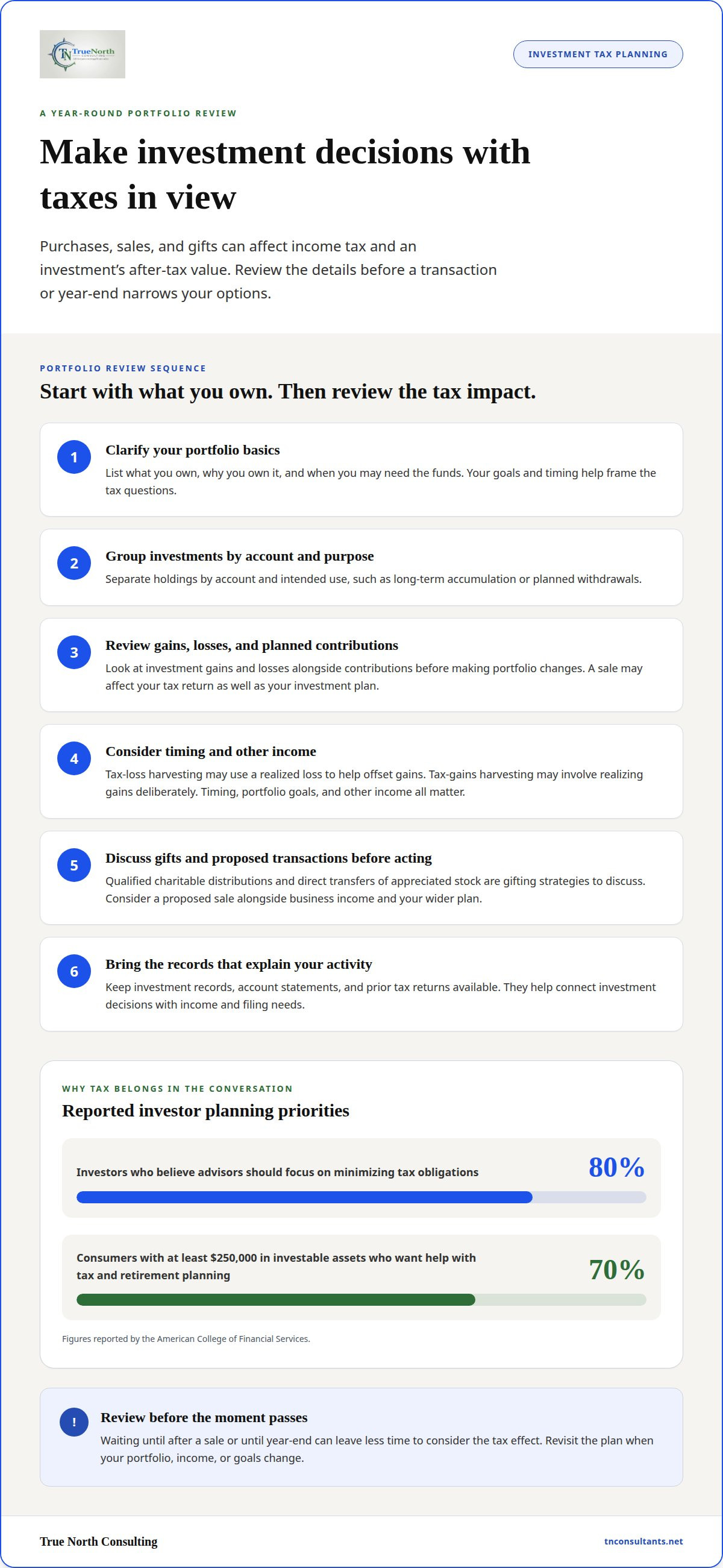
Investment decisions affect more than portfolio growth. Tax planning considers how purchases, sales, and charitable gifts may shape income tax and the after-tax value of an investment. The American College of Financial Services reports that 80% of investors believe their advisors should focus on minimizing tax obligations. That expectation makes tax discussions a useful part of financial planning, not just filing preparation.
Investors may use tax-loss harvesting or tax-gains harvesting to manage capital gains and after-tax returns. A review can identify investments with gains or losses and consider how a sale could affect your tax return. Selling an investment at a loss may help offset gains, while realizing gains deliberately may fit a broader plan. Timing, portfolio goals, and other income all matter.
Plan throughout the year. Waiting until a sale or year-end can leave less time to consider the tax effect. An advisor can review investment activity alongside business income and discuss whether a proposed transaction fits the wider plan. Qualified charitable distributions and direct transfers of appreciated stock are also gifting strategies to discuss. The right approach depends on your goals and circumstances.
Start with portfolio basics: what you own, why you own it, and when you may need the funds. Group investments by account and purpose, such as long-term accumulation or planned withdrawals. Then review gains, losses, and planned contributions before making changes. The American College of Financial Services reports that 70% of consumers with at least $250,000 in investable assets want help with tax and retirement planning. Those concerns often overlap in a portfolio review.
Keep investment records, account statements, and prior tax returns available for planning conversations. They help connect investment management decisions with income and filing needs. If your portfolio changes or a major sale is under consideration, investment tax planning guidance can help frame the tax questions before you act.
Individual federal and state tax preparation and planning
Individual planning brings federal and state filing considerations together with changes in your income, household, and assets. Reviewing these details before filing can surface questions that a tax return alone may not answer.
Defining the Scope of Tax Planning
Define the work by listing the decisions and tax questions you need addressed. A change in household income, for example, may call for different planning than a review focused on investments. Clarify whether you need tax preparation, forward-looking guidance, or both. A clear scope keeps the discussion focused on your circumstances and the records relevant to your questions.
Federal Tax Strategies
A federal review can examine income sources, potential deductions, and tax credits that may apply to your situation. Gather documents explaining changes in employment, household income, and asset ownership. If you received income from a new source, note when it began and keep its supporting records together. This helps connect your return to the financial activity behind it.
A tax strategy should also consider decisions you can still make, rather than only explain last year’s filing. If you expect a major income change, for instance, discuss how it affects your plans and which records will support the eventual return.
State and Local Tax Planning
State and local obligations can depend on where you live and where you earn income. A move, work in another jurisdiction, or a change in business activity can raise filing questions. Record address changes and the places connected to your income, then include those details in your planning conversation.
For Virginia-specific guidance, use the Virginia Department of Taxation’s current resources alongside your federal records. If you have income connected to another state, include that jurisdiction in your review. Organizing details by location can clarify which questions need attention before filing and support consistent reporting across returns.
Quarterly tax estimates and withholding recommendations
Estimated payments and paycheck withholding are ways to pay tax during the year. A financial plan can connect expected income, retirement withdrawals, and business activity with those payment choices.
Quarterly Tax Estimates
Estimated payments may suit business owners and individuals whose income does not have enough tax withheld. A planning review starts with expected income, previous payment records, and changes such as a new contract or investment sale. The aim is to set payments that reflect current circumstances, not an outdated estimate. Revisit the calculation when income or deductions change.
A business owner, for example, can compare updated profit projections with amounts already paid. A change in revenue may affect how much to set aside and whether withholding should change. Keep payment confirmations and supporting financial records together for the next tax return.
Tax Rules and Deadlines
For 2026, distinguish estimated payments from paycheck withholding, then map each to the applicable federal and state schedule. The dates and amounts depend on the taxpayer’s payment method, income pattern, and jurisdiction. Use current tax agency calendars to track relevant deadlines, and build reminders into your financial plan. State schedules may differ from federal ones.
Review your payment schedule when a major income change occurs. A business owner adding a revenue stream, for instance, may need to revisit estimated payments. Direct each payment to the correct tax account and record its date to keep filing records organized.
Withholding recommendations also affect retirement income and wealth management decisions. A review can connect paycheck withholding, other income, and estimated payments in one plan. If your income changes during the year, discuss tax planning support to align payment decisions with updated financial information.
True North Consulting
True North Consulting helps business owners connect tax preparation with organized accounting records and practical financial decisions. Its tax, accounting, and fractional CFO services can support planning around income changes, estimated payments, and business performance. Cannabis businesses can also draw on specialized cannabis accounting tailored to the industry’s regulatory, compliance, and IRC 280E requirements.
Consider tax planning support when business activity changes, financial records need attention, or tax decisions affect broader plans. True North Consulting helps businesses use financial information to prepare for tax obligations and understand business performance. Contact the firm to discuss your tax planning needs.
Make Your Next Tax Decision With a Clear Plan
Use your next planning conversation to look beyond the return. Identify upcoming decisions, the information that can clarify them, and how each choice fits your business or personal priorities. Addressing these questions early can give you a clearer view of the tax implications of a major financial change.
Tax planning services can turn those questions into a focused discussion. True North Consulting brings practical financial insight to conversations about your circumstances and next steps. Start with the decision you are weighing and the records that explain your current situation.
When you’re ready to discuss your tax planning needs, contact True North Consulting. A clear conversation can help you determine what to address next and move forward with greater confidence.
Frequently Asked Questions
What are tax planning services?
Tax planning services help you consider how financial decisions may affect your tax position before filing. If you expect income from a business sale, for example, a planner can help identify questions about timing, investment gains, and records to retain. Planning may also connect business and personal finances, giving you a clearer basis for decisions throughout the year.
Do I need a tax and financial advisor?
You may benefit from both tax and financial guidance when choices overlap with business, investment, or retirement decisions. A tax professional can focus on preparation and tax implications, while a financial advisor may address broader goals and investment management. If you are deciding whether to sell an asset or change owner compensation, coordinated guidance can help you weigh the tax effect alongside your financial priorities.
How do you know what level of tax planning you need?
Match the work to your income sources, business structure, investments, and upcoming decisions. If you have wage income and a straightforward return, you may need a different scope from a business owner with changing income, several accounts, or a planned sale. Start by identifying the decisions you face, then determine which records and professional input they require.
How do trusts help with tax planning for wealthy families?
Trusts can support different family and wealth-planning goals, but their purposes vary by structure. Revocable, irrevocable, and charitable trusts may suit different needs. Families considering multi-generational wealth preservation may discuss irrevocable life insurance trusts or generation-skipping trusts. The choice involves more than taxes, so weigh family goals, assets, and intended beneficiaries with appropriate professional advice.
Looking for help with taxes?
True North Consulting provides tax planning, preparation, and advisory services for businesses. For Virginia business owners, organized accounting records can connect day-to-day activity with tax decisions. The firm also provides accounting and fractional CFO services to support financial planning around business performance. Discuss your current tax questions and upcoming business decisions with the team.
What tax planning services do individuals and businesses typically receive?
Individuals can get help organizing tax information and planning around income, investments, and charitable giving. Businesses can receive tax preparation and advisory support, as well as bookkeeping, reconciliations, and financial statements. True North Consulting also provides federal and state tax filing, tax credit reviews, asset depreciation reports, and quarterly federal tax estimates.