


Yes, business tax services in Virginia can help assess whether an amended return is appropriate and prepare a filing based on your business records. Virginia businesses can no longer file and pay certain taxes and fees through the old online platform after November 30. This article explains how amended filings, tax notices, state and local obligations, planning, and Virginia’s online services relate to your business, and when accounting and tax support may help.
Key Takeaways
- An amended return may address an earlier filing issue, while the right response to a tax notice depends on what the agency requests and the records behind the return.
- Virginia businesses need to account for state and local obligations, including corporate income, sales and use, and withholding taxes.
- Planning around business records, deductions, credits, and changing tax rules can help you make more informed filing decisions.
- Virginia’s online services affect how businesses file and pay certain taxes and fees, so understanding the platform transition can help prevent administrative disruption.
IRS and state tax notice and audit representation
A tax notice is a request or claim that needs attention, not a reason to change a return without review. Identify the tax period, agency, issue, and response date on the letter. Then compare it with the filed return and supporting records. Many IRS audits request additional information about a return, so organized records can help explain reported income, expenses, payroll, or withholding.
When accounting records are incomplete, record reconstruction means rebuilding the transaction trail from available financial documentation. For example, bank statements, invoices, payroll reports, and accounting software entries can help explain a business expense or deposit. The preparation step is to match each amount to its supporting document, identify gaps, and keep the explanation consistent with the original return. A mismatch between payroll reports and W-2s can draw IRS attention.
Virginia and federal notices can carry personal exposure. The IRS can hold a business owner personally liable for the employer’s portion of payroll taxes. Virginia can also hold an owner personally liable for state withholding taxes, and Virginia corporate tax debt can result in personal liability. Virginia law protects confidential taxpayer information under Va. Code § 58.1-3.
Late or incorrect Virginia business tax filings can create unpaid tax liability and personal exposure, especially for state withholding or sales taxes. Unpaid payroll taxes can lead to injunctions and criminal penalties; the IRS may assess civil penalties for missing W-2s or W-3s, or significant mismatches in payroll reports. The specific exposure depends on the tax and filing issue.
Separate a document request from a dispute over the amount owed. For an audit response, organize records by tax period and answer each item directly. Appeals and collections involve different steps; a business tax attorney can represent businesses in tax appeals, collection appeals, and U.S. Tax Court petitions involving state and federal taxes. Clear records help establish what was filed, what changed, and which issue remains unresolved.
State and local income and sales/use taxes
Virginia businesses may need to manage corporate income tax alongside sales, use, withholding, and local tax filings. The required filings depend on the business’s activities and the type of tax.
Payroll withholding affects reporting and can create personal exposure for owners. Virginia may hold a business owner personally liable for state withholding taxes, so accurate payroll records and timely filings are important.
Income and Sales Tax Filing
Virginia imposes corporate income tax, while sales and use tax filings depend on a business’s taxable activity. Preparing a return can involve reconciling sales records, purchases, collected tax, and payments. Business tax services in Virginia can help coordinate records and filings across relevant state and local obligations. Review what each return covers rather than treating every tax as a single filing.
Franchise, Use, and Local Taxes
Franchise taxes, use taxes, and local business taxes can create separate reporting tasks. Use tax may relate to purchases where sales tax wasn’t collected, so purchase records help identify transactions for review. Local obligations can vary with business location and activity. A tax review can organize those obligations alongside state income and sales filings, including real property tax appeals where relevant. The goal is to match each filing to its supporting records.
Business Tax Rates and Deadlines
Virginia imposes corporate income tax, but income tax treatment depends on the business’s tax structure. Deadlines vary by return type and tax period, so use the instructions for each filing to determine its due date. Before preparing a return, reconcile income and expense records. Keep sales, use, and corporate filings distinct so they are not mistaken for interchangeable obligations.
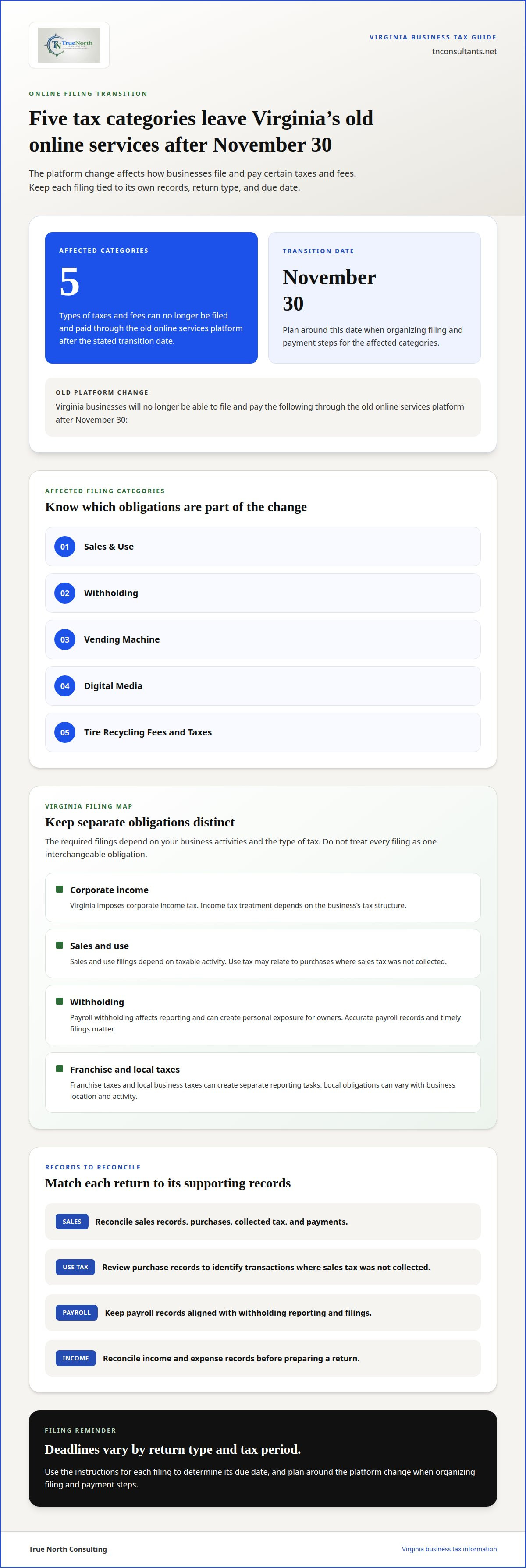
Virginia businesses will no longer be able to file and pay Sales & Use, Withholding, Vending Machine, Digital Media, and Tire Recycling Fees and Taxes through the old online services platform after November 30. Account for that platform change when planning filing and payment steps.
Preparation and filing work depends on the returns, jurisdictions, and condition of your records. A records review can clarify the scope; organize business tax filings around the obligations that apply.
Tax planning, deductions, and credits
Tax planning connects business decisions with federal and Virginia filing obligations. A practical review considers rule changes, business structure, documented expenses, and investment activity.
Year-Round Tax Planning and Compliance
Planning is most useful throughout the year, not only during return preparation. Review income, expenses, payroll, and major purchases as they arise, then compare your records with current local and federal tax rules. Early review can flag questions, such as how a planned equipment purchase or charitable contribution may affect the business’s tax position.
Tax-loss harvesting requires careful timing. Review realized investment losses alongside gains and consider each transaction in the context of the business’s overall tax position. Keep transaction records and statements together so they can be accounted for during preparation. Don’t sell an investment solely for a tax result without considering its business purpose and financial effects.
Business Tax Credits and Deductions
A business may claim deductions and credits only when it meets the relevant federal or Virginia eligibility rules and can support the claim. A deduction generally reduces taxable income, while a credit generally reduces tax liability. Treatment depends on the activity, expense, and supporting records, so separate business purchases from personal spending.
For a property-related expense, retain invoices and records showing how the property supports business operations. Review each potential claim against current rules before including it in a filing. This helps distinguish a documented business expense from an unsupported assumption.
Tax Rules by Business Structure
An LLC, corporation, partnership, or sole proprietorship may have different reporting requirements depending on its structure and tax classification. Entity choice has legal and tax consequences, and the business name alone does not determine how income is reported. Review formation documents, ownership, elections, and planned changes together before choosing a filing approach.
Virginia tax planning should account for federal treatment too, since a change in structure can affect both. Compare the reporting implications of each option before changing an entity or distributing income. A tax professional can assess the business’s circumstances, records, and goals, then explain the tradeoffs before filing or restructuring.
Virginia business tax online services
Virginia’s online tax services affect how businesses file and pay certain taxes and fees. The platform transition also makes account access and recordkeeping part of tax administration.
Finding Virginia Tax Accountants
When choosing a tax accountant for Virginia filings, begin with the work your business needs: bookkeeping cleanup, return preparation, tax notice support, or ongoing planning. Match the accountant’s experience to your entity, tax types, and records. For example, a business with payroll and sales activity needs support that accounts for both filing streams.
An attorney handles legal questions about an entity or dispute; an accountant handles accounting and tax reporting. Keeping those roles distinct helps direct each issue to the appropriate professional.
Comparing Tax Service Providers
Compare tax services by the filings they handle, how they work with your records, and how they explain bookkeeping gaps. Consider how they organize federal and Virginia deadlines, reconcile reports, and document decisions. These criteria help you assess whether the work fits your business, rather than relying on broad service labels.
Consider whether the process gives you useful reports for future decisions. Clear transaction records can help identify errors and support tax compliance, but projected savings should never replace accurate filing.
Virginia businesses will no longer be able to file and pay Sales & Use, Withholding, Vending Machine, Digital Media, and Tire Recycling Fees and Taxes through the old online services platform after November 30. Plan the transition around the tax types your business files, and retain confirmations and supporting records with the related reporting period.
The Virginia Tax online system defines an authorized person as someone accessing their own tax information or someone legally authorized to act for an individual. Access depends on that authority, not simply on an employee’s bookkeeping role. Household employers in Virginia can register as businesses on the new online services platform.
Use tax services that connect portal activity with your accounting records, so filing and payment information stays organized. Get help organizing business tax records for Virginia filings.
True North Consulting
True North Consulting connects tax filings with the accounting records and business decisions behind them. Its accounting and tax services support amended filings, tax notices, record organization, and planning when your process has gaps or Virginia obligations become harder to manage. For cannabis businesses, specialized cannabis accounting addresses industry-specific reporting and tax considerations. Fractional CFO services provide financial insight to help assess cash flow, profitability, or growth plans alongside tax decisions.
Turn to True North Consulting for help preparing for tax obligations, understanding how financial records support a filing, or organizing next steps after receiving a notice. The firm provides tax agency notice and audit support. Contact True North Consulting to discuss the tax or accounting issue your business needs to address.
Turn tax questions into a clear next step
Your next tax decision should fit both your current filing position and your business plans. Before changing a filing approach or making a structural decision, identify the question you need answered and the records that inform it. This keeps the discussion focused on practical choices, not assumptions. The right business tax services in Virginia can connect tax decisions with your broader financial picture, helping you move forward with a clearer view of their implications.
True North Consulting’s team brings accounting expertise to tax services and Fractional CFO services. This combination can help you address tax questions while considering reporting needs, financial performance, and business priorities. The next step is a focused discussion about the issue you’re facing and the outcome you need to plan for. Contact True North Consulting to discuss your business’s tax and financial needs. A clear starting point can help you approach the next decision with greater confidence.
Frequently Asked Questions
Can you help me amend my previous tax filings?
Yes. Tax services can help review an earlier return and prepare an amended filing when the records support a correction. For example, a business may find an omitted expense or misclassified transaction during reconciliation. Gather the filed return, relevant financial records, and any notice related to the issue. Comparing these documents helps identify what changed and what needs explanation.
Do you provide tax planning help?
Yes. Tax planning can connect upcoming business decisions with tax reporting and cash flow. Before adding a partner, changing compensation, or purchasing property, review how the decision may affect records and future filings. Year-round planning also helps keep accounting records organized for preparation. True North Consulting provides tax planning and fractional CFO services to help businesses evaluate financial decisions.
How do I know which of my expenses are tax-deductible?
Start with the expense’s business purpose and supporting records. An invoice, receipt, contract, or accounting entry can show what the business purchased and how it was used. Keep personal and business activity separate, and record the transaction in the appropriate category. A tax professional can review the details against applicable rules before the expense is included on a return.
Should I outsource my taxes?
Outsourcing may make sense when tax preparation takes time away from operations, records need cleanup, or filings involve several tax types. It can also connect bookkeeping with tax reporting, creating an organized record trail for reported figures. If your filings are straightforward and your internal process works well, outside support may be less useful. Consider the complexity and consistency of your current process.
What business tax services are available in Virginia?
Virginia businesses can get support with tax planning, preparation, federal and state filings, and responses to tax agency notices. Related accounting services may include bookkeeping, reconciliations, and financial statements that support those filings. Cannabis businesses may need accounting tailored to industry-specific regulatory and tax requirements. The right scope depends on your business activity, records, and current tax issue.
What Virginia state taxes do businesses need to pay?
Potential obligations include corporate income tax, sales and use tax, and employer withholding. Franchise taxes, local business taxes, and real property taxes may also matter based on the business and its activities. A retailer, for example, may have sales tax responsibilities, while an employer must account for withholding. Review the tax types tied to your operations and locations before planning filings.